Using palate personality and taste science to surface food discoveries that actually resonate

Taste Buds is a mobile app that transforms how people discover food by grounding restaurant and dish recommendations in taste science, so every suggestion feels personal, not algorithmic.
Team
Manvi Tandon
My role
Designer
Researcher
Tools
Figma
Claude Design
Duration
1 month

THE DESIGN CHALLENGE

Make an app to engage with the senses

Our team was given the following design challenge:
You are part of a small tiger team, within a larger company, that is experimenting with new ways to engage people’s senses. The company leadership doesn’t yet know exactly what they want this new digital experience to look and feel like, but they are eager for something surprising or unique, and are currently less focused on the business model behind it. They have asked you to design an experience that helps people engage one or more of their senses, or experience something through one of their senses in a new way.

THE SOLUTION

Answering the modern-day problem: "What to eat?"

When given this design challenge, we knew that we had to address taste as a sense and the numbness that has developed in reaction to the ease of delivery/discovery apps and the availability of choice (especially in New York City).
Taste Buds tackles three interconnected food frustrations: the comfort-zone trap of ordering the same thing, the paralysis of too many options, and the group chat that never reaches a consensus. By grounding every recommendation in taste science, the app turns indecision into discovery.

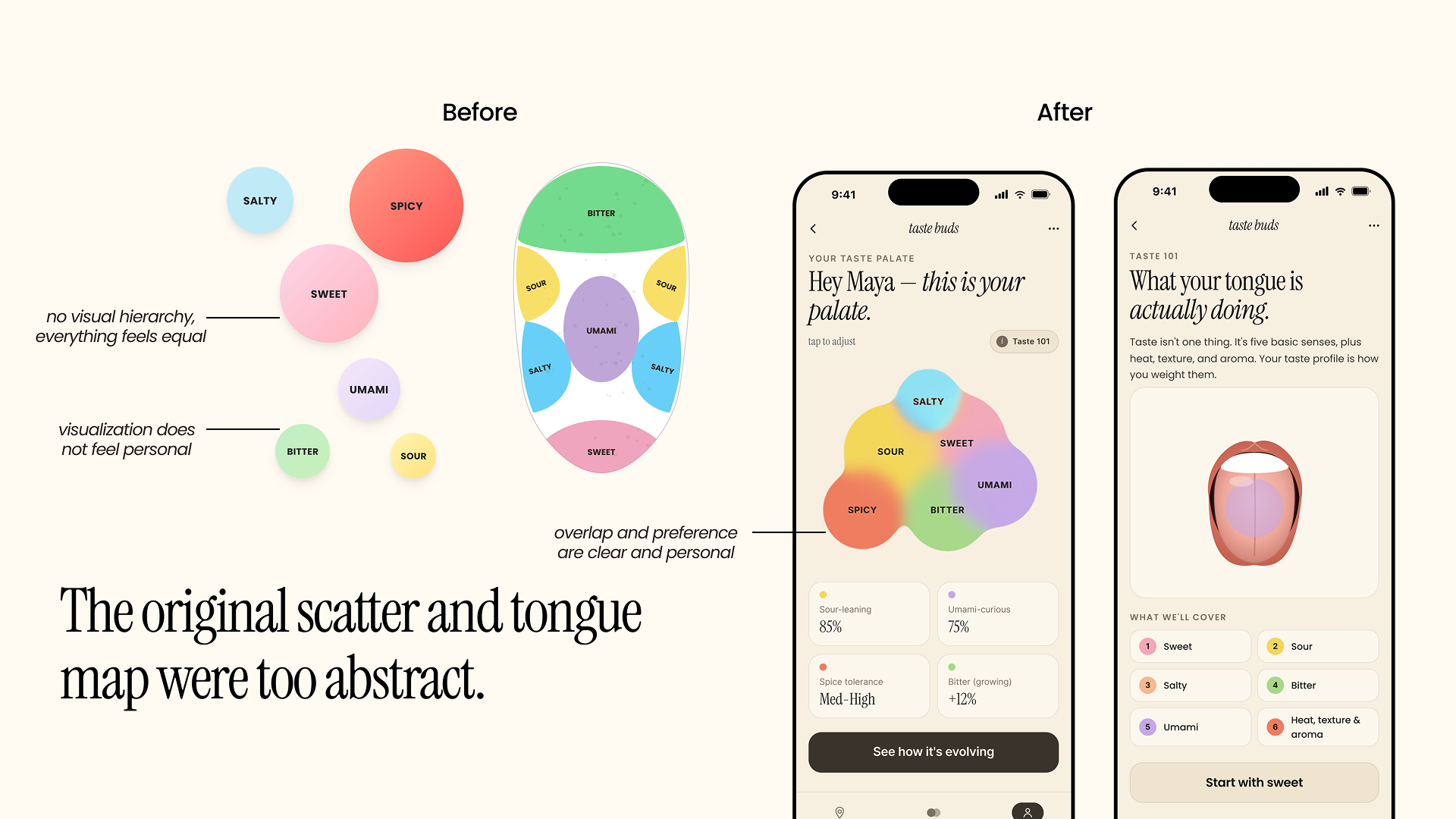
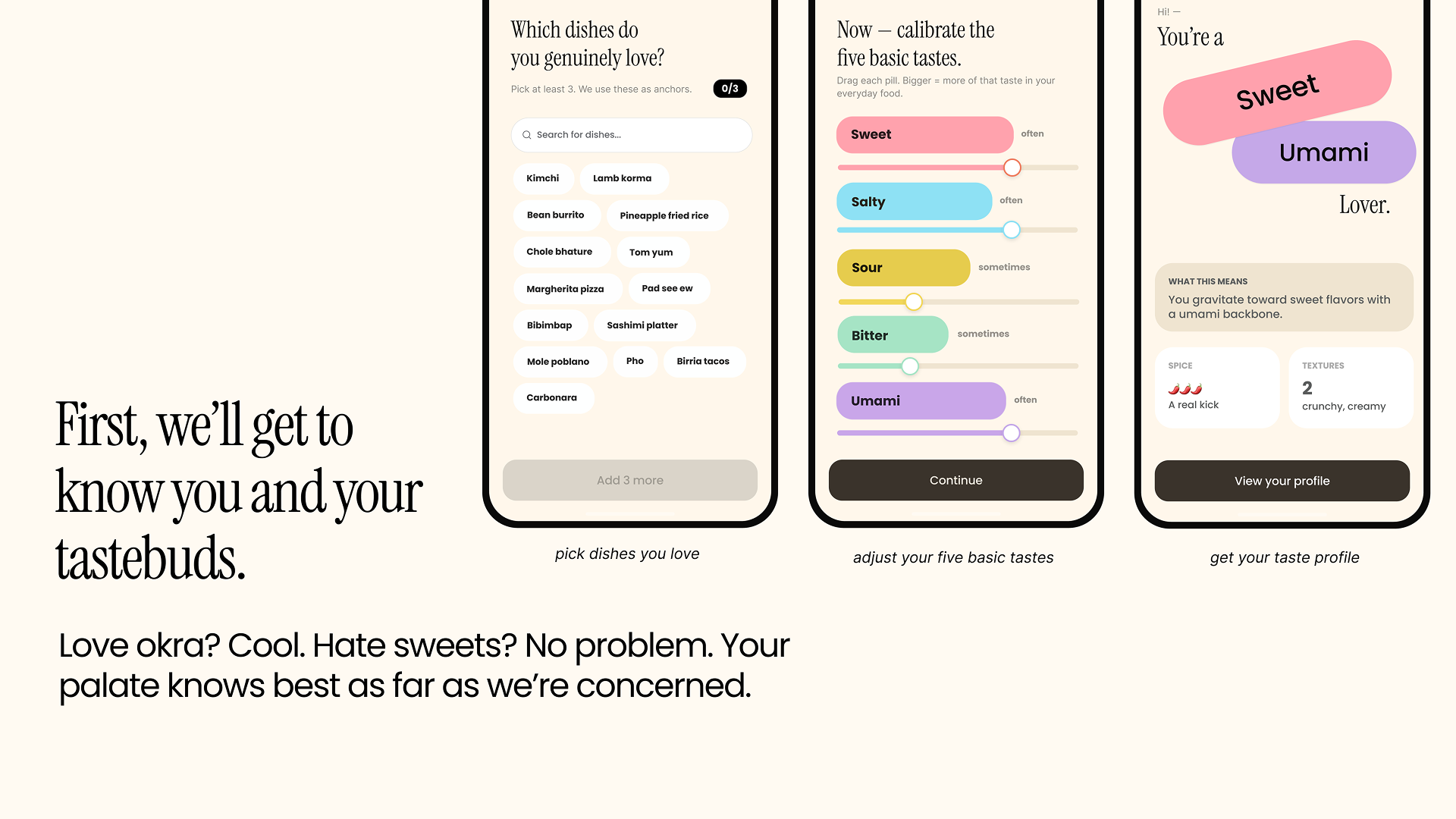
Learn

Track your evolving palate and find areas to grow

Explore

Recs that feel like a friend, not an algorithm

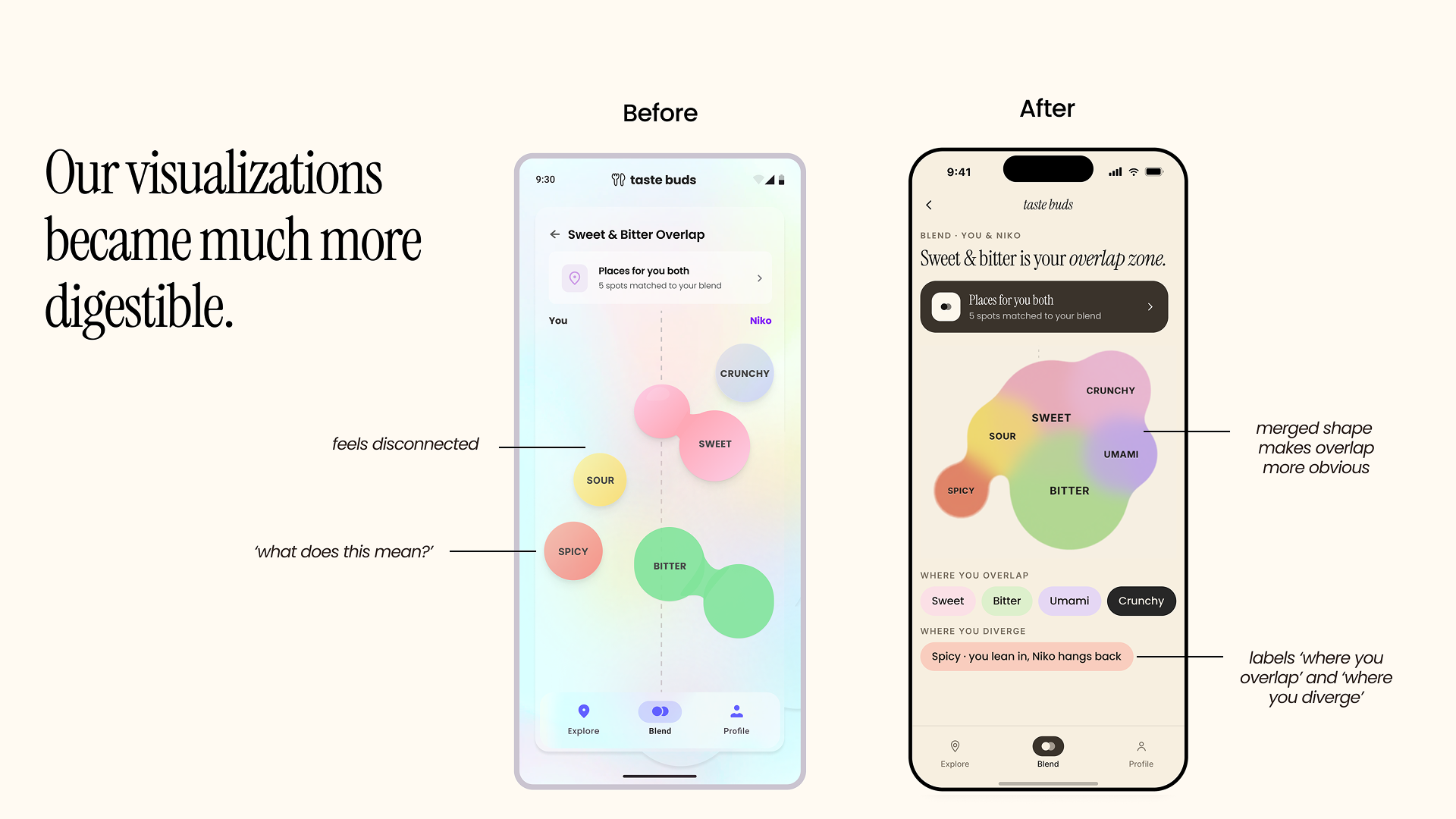
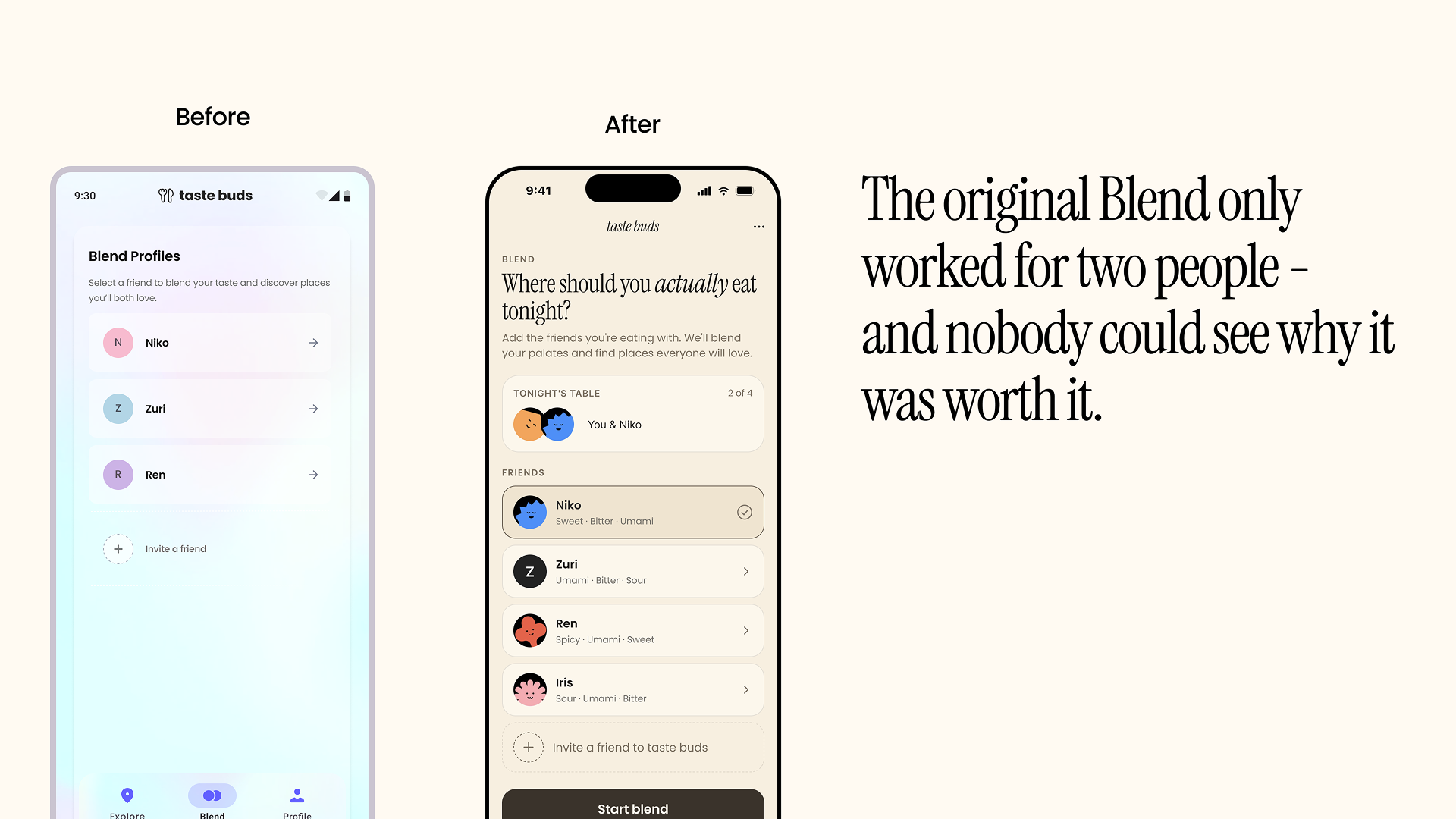
Blend

End the "where should we eat?" debate for good

LANDSCAPE INSPIRATION

Intersecting self-discovery, science, and exploration

Taste Buds draws from different worlds: personality tests, taste science, and food exploration apps.
Personality tests showed that people are motivated to learn about themselves when the framing feels insightful rather than transactional.
Taste science offered a credible backbone for the recommendation logic,
Food discovery apps revealed where curiosity and exploration could be better supported.

HERO INTERACTIONS

A literal tongue versus an abstraction of taste

We centered Taste Buds' design around three hero interactions that would reflect and enable the core flows of the app.
hero interaction #1

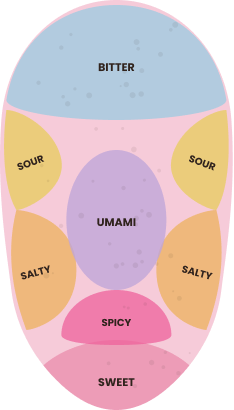
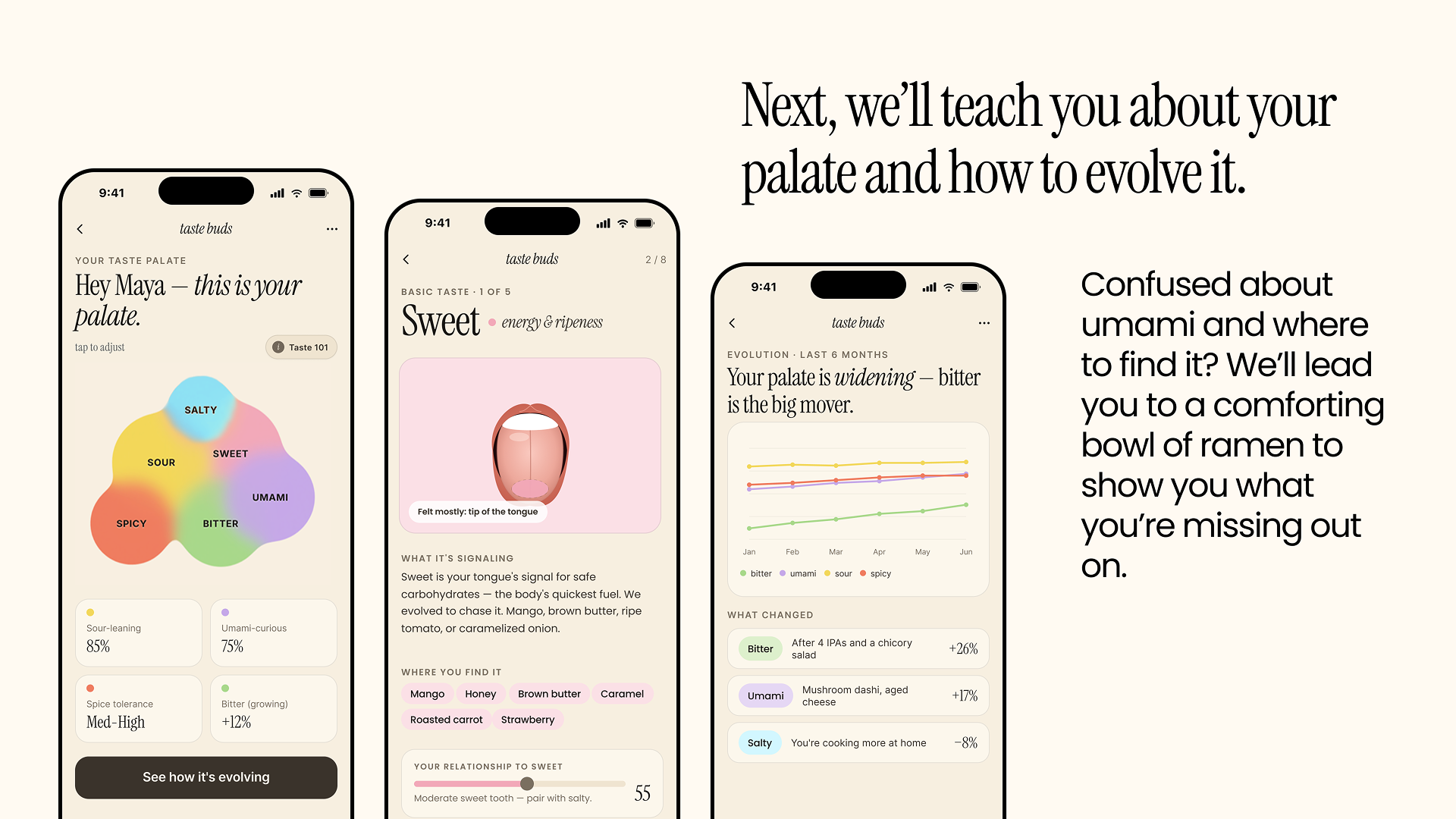
A tongue map

The tongue map was inspired by existing, but misconceived, tongue maps in taste science. We imagined tappable sections for basic tastes that would:
  • Have differing opacities based on user's percentage liked and disliked
  • Open up to a description of the taste, a list of foods with that taste, and a percentage of how much the user likes the taste
  • Let users quickly scan their taste preferences
hero interaction #2

An abstract view of taste preferences

We wanted our app to lean into abstraction, especially to combat the straightforwardness of food delivery and discovery apps.
So, we imagined the basic tastes being displayed as abstract 'taste buds', in addition to the map.
However, we imagined them having similar functionality to the tongue map. So we struggled to justify having both in the app, at least in the first few iterations.
hero interaction #3

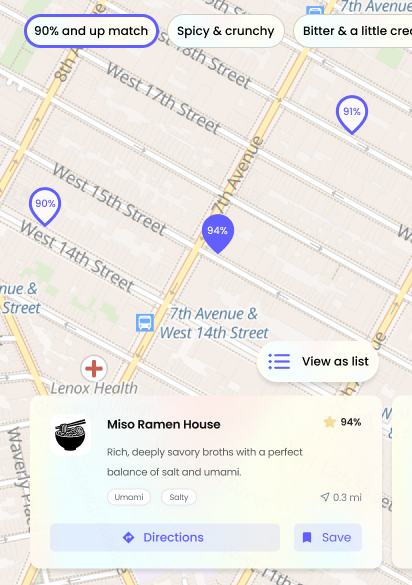
A scannable map of recommendations

The most straightforward feature of the app was the restaurant and dish recommendations in list and map format.
This would take user's taste profile and make recommendation based off their palate.
Users would also have the ability to filter the recommendations, which would be apt for someone who has certain cravings that don't necessarily fit their day-to-day palate.

ITERATIONS

Like a palate, our app was evolving too

Taste Buds went through three rounds of user testing and iterations to come to its final stage. The first two were focused on refining the hero interactions, and the last one was to refine the design system, which was the biggest change. Originally, the designs were overwhelmed with color, so we changed the supporting elements to be more neutral to allow the visualizations to shine through.

FINAL DESIGNS

Turning the abstract into something real

After multiple design and functional iterations, we finalized the core four flows of the app.

NEXT STEPS

Taste Buds as an ecosystem, not just an app

If we were to continue working on building the app, we make the following future speculations:
speculation #1

Cultural mapping (the world map view)

Taste is also cultural. Future iterations could visually map the geographic origins of a user’s palate. If someone leans heavily into sour and umami, the app could show them how their taste aligns with specific regional cuisines.
speculation #2

Restaurant partnerships (B2B)

Instead of relying purely on crowdsourced data, restaurants could partner with Taste Buds to highlight hidden menu items or unique fusion dishes that precisely match a user’s niche palate.
speculation #3

Community-led exploration

Evolving beyond solo discovery by allowing users to follow "Taste Curators" (local chefs, food bloggers, or friends with similar profiles) and explore restaurants through their specific taste lenses.
You've reached the bottom of the page! Now go touch some grass.